The School She Could Not See
At the Escuela Nacional de Ballet in Old Havana, the dancers train in front of mirrors their founder could barely have used.
By Robin Blackstone
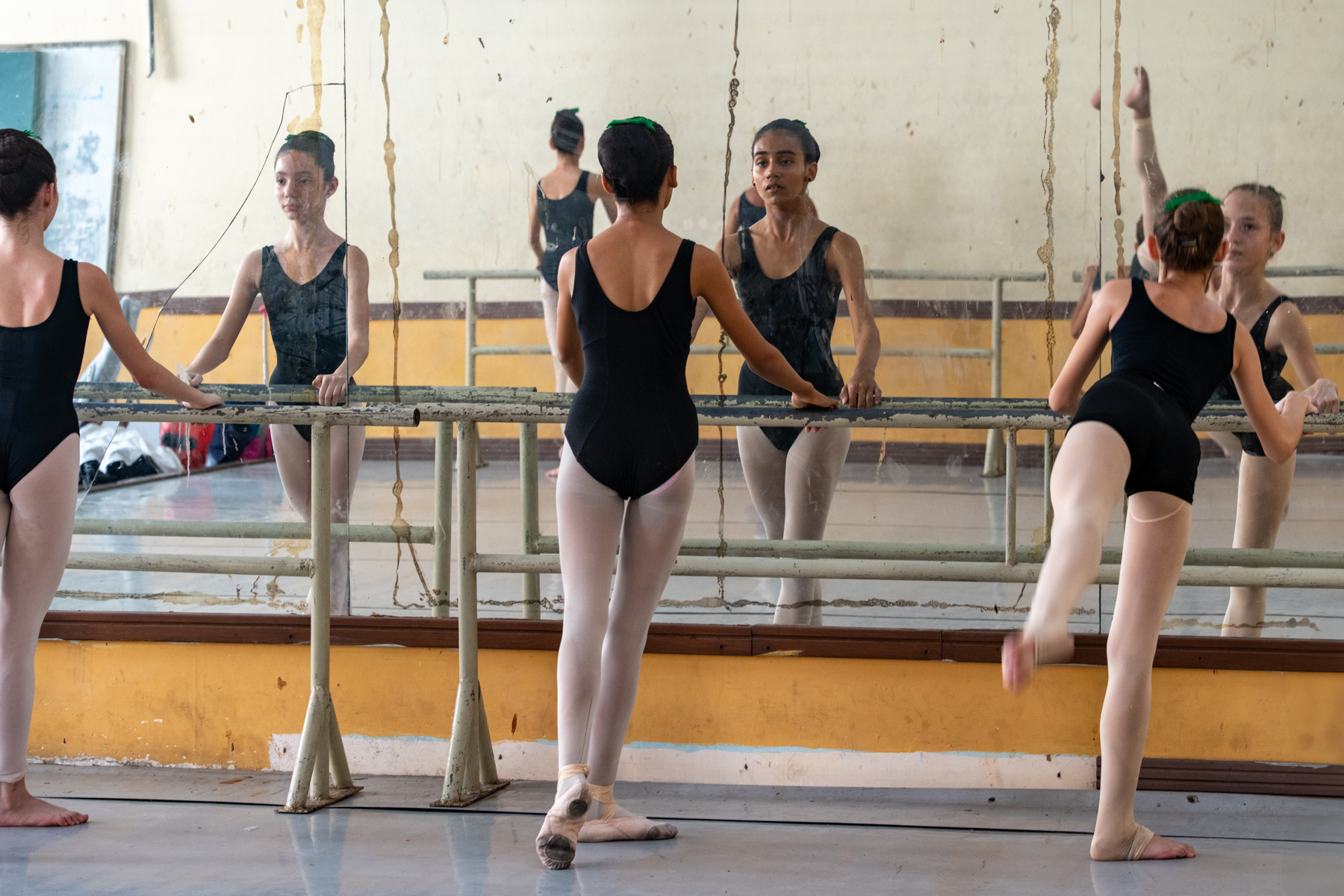
The first thing I noticed was the mirror. It had a long vertical crack running from the top of the frame nearly to the floor, the kind of fissure that should have meant the mirror was condemned, replaced, removed. Instead, six girls in black leotards stood at the barre in front of it, watching themselves split in two.
Behind them the wall was peeling in long ribbons, the yellow paint streaked with what looked like rust or rainwater. The barre itself was rusting where it met the floor. None of this seemed to register on the children. They lifted their working legs in unison, the cracked mirror doubling each of them at slightly different angles, and the room was very quiet except for the small dry sound of pointe shoes on the linoleum.
This was the Escuela Nacional de Ballet de Cuba in Old Havana, in the spring of 2024. I had been making photographs for only a few years, and I had come to Cuba on the kind of trip that should have made me distrust myself: a foreigner with a camera in a country whose visual life has been more thoroughly mythologized than almost any other on earth. But the school was not Havana of the postcards. It was a building inside a building inside a story I was only beginning to understand.
The story begins with a woman who could not see.
Alicia Alonso was born in Havana in 1920, trained in New York with the great teachers of the Ballet Russe diaspora, and by her early twenties was dancing principal roles for what would become American Ballet Theatre. She also began to lose her sight. Detached retinas, multiple surgeries, long convalescences in dark rooms where, the story goes, she rehearsed Giselle in her head with her fingers tracing the choreography along the bedsheets. She returned to the stage half-blind and stayed there for the next fifty years. Her partners learned to guide her with the lightest pressure on the wrist. The stage was lit so she could orient by the brightness of the wings.
After the 1959 revolution, Fidel Castro asked Alonso what she wanted, and she told him she wanted a ballet school. She got more than that. Cuba built her the Ballet Nacional de Cuba, with state salaries for dancers and a national pipeline of academies that pulled in children from every province. The Escuela Nacional in Havana became the apex. Its dancers won medals at Varna and Moscow and Jackson; they defected, some of them, to American Ballet Theatre and the Royal Ballet and the Paris Opera; the ones who stayed built one of the strangest and most distinctive ballet traditions in the world.
You can see it on the bodies. The technical foundation is Vaganova, the Soviet method that came in through the Russian teachers of Alonso’s circle and was reinforced by Cold War cultural exchange with Moscow. There is also French in the upper body, port de bras that looks more Paris Opera than Bolshoi, a residue of Alonso’s own training. But the Cuban thing is what happens when those imports meet bodies that grew up to clave and rumba and the Yoruba-derived dances of orisha worship that are still alive on the streets two blocks from the school. You see it in the hips, which sit differently. You see it in the attack on the downbeat, which is faster and less polite. You see it in a kind of warmth that is hard to name but easy to recognize when a Cuban dancer walks onstage in London or New York.
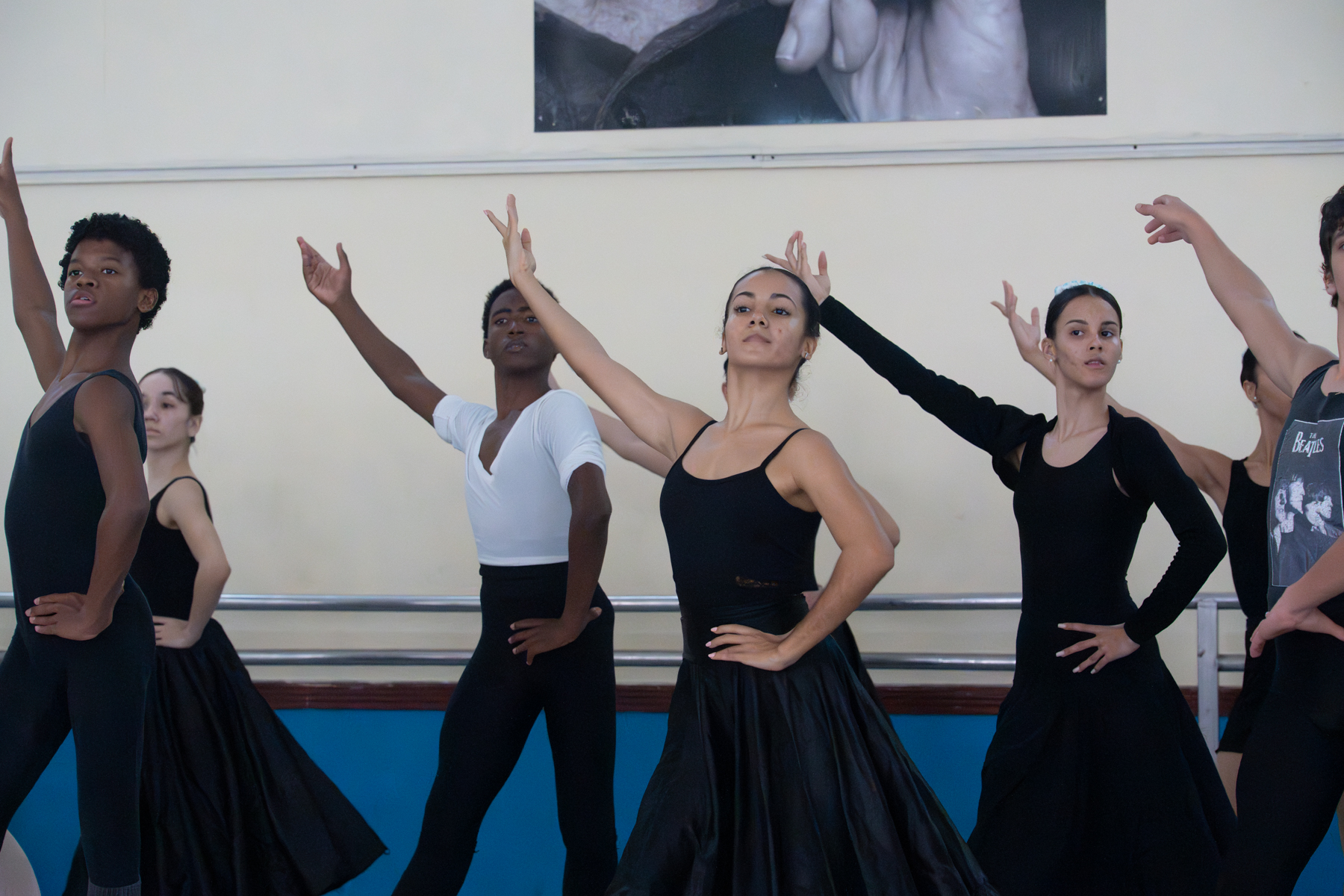
The dancers I photographed were fourteen to seventeen years old. They had been chosen at six or seven and had been training six days a week ever since. They knew that Cuba was emptying out around them. The year before my visit, more than half a million Cubans had left the island, the largest exodus since Mariel, and the economy was in the kind of slow collapse that turns electricity into a rumor and food into mathematics. They knew their best route out was through their own feet. Some of them would make it. Most would not.
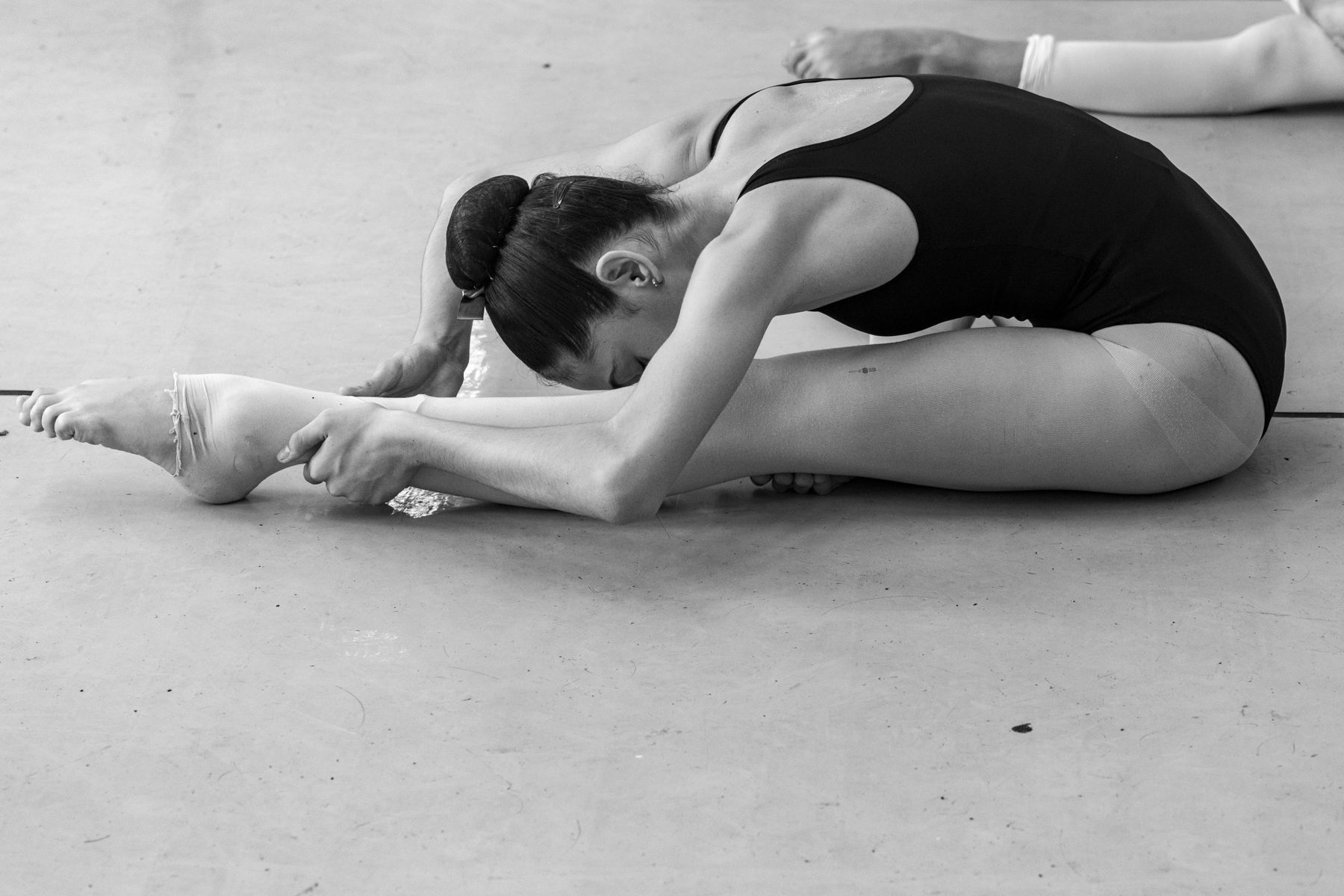
I tried to photograph two things at once: the discipline and the fragility.
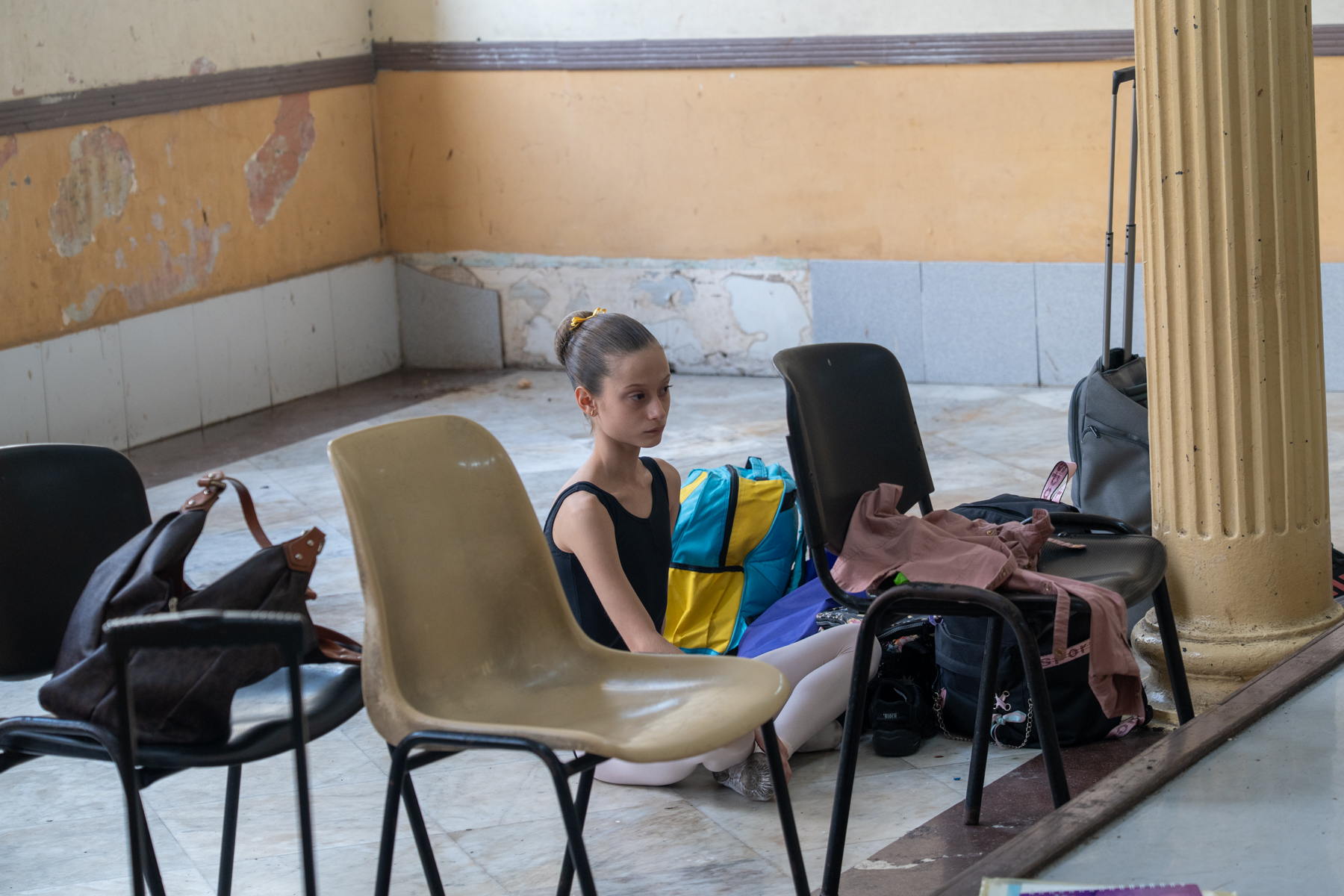
The girl alone among the chairs and the backpacks, her hair already in a bun, waiting for class to start in a corridor whose paint was older than her grandmother.
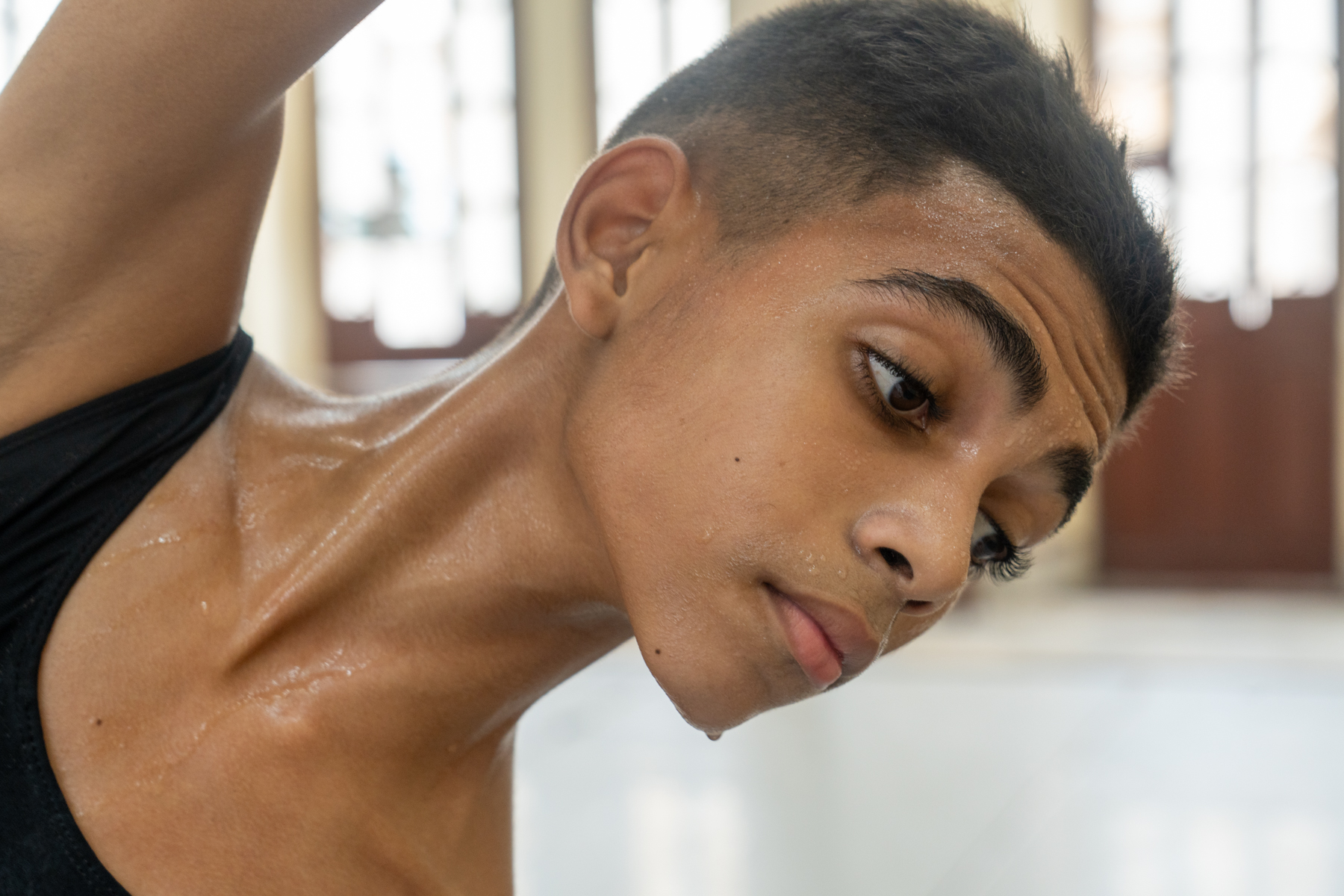
The boy in profile, sweat sliding down his neck, the studio dissolving into white light behind him.
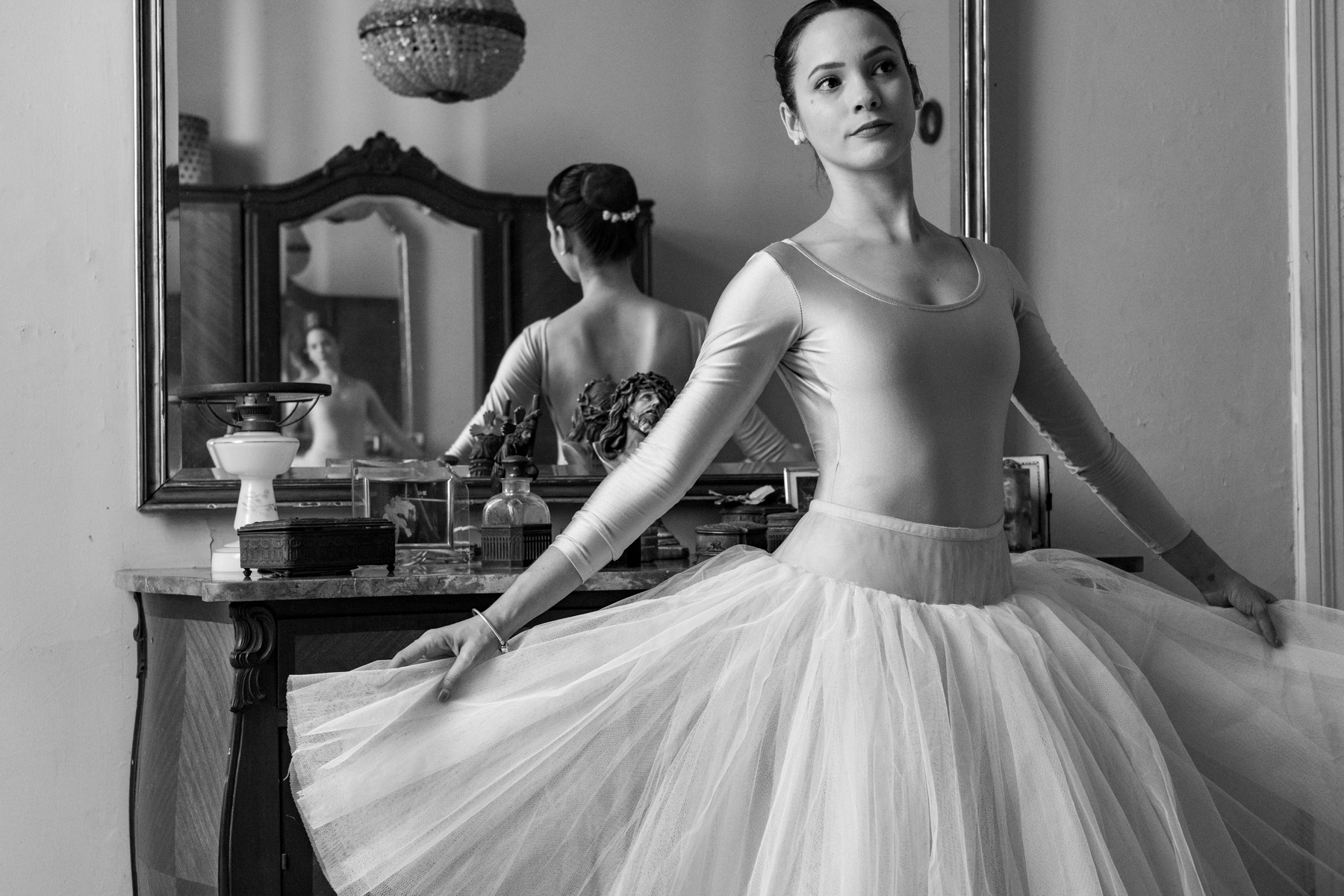
The dancer at the dressing-room mirror with her tutu spread out around her like a halo, her face holding a question I did not know how to ask.
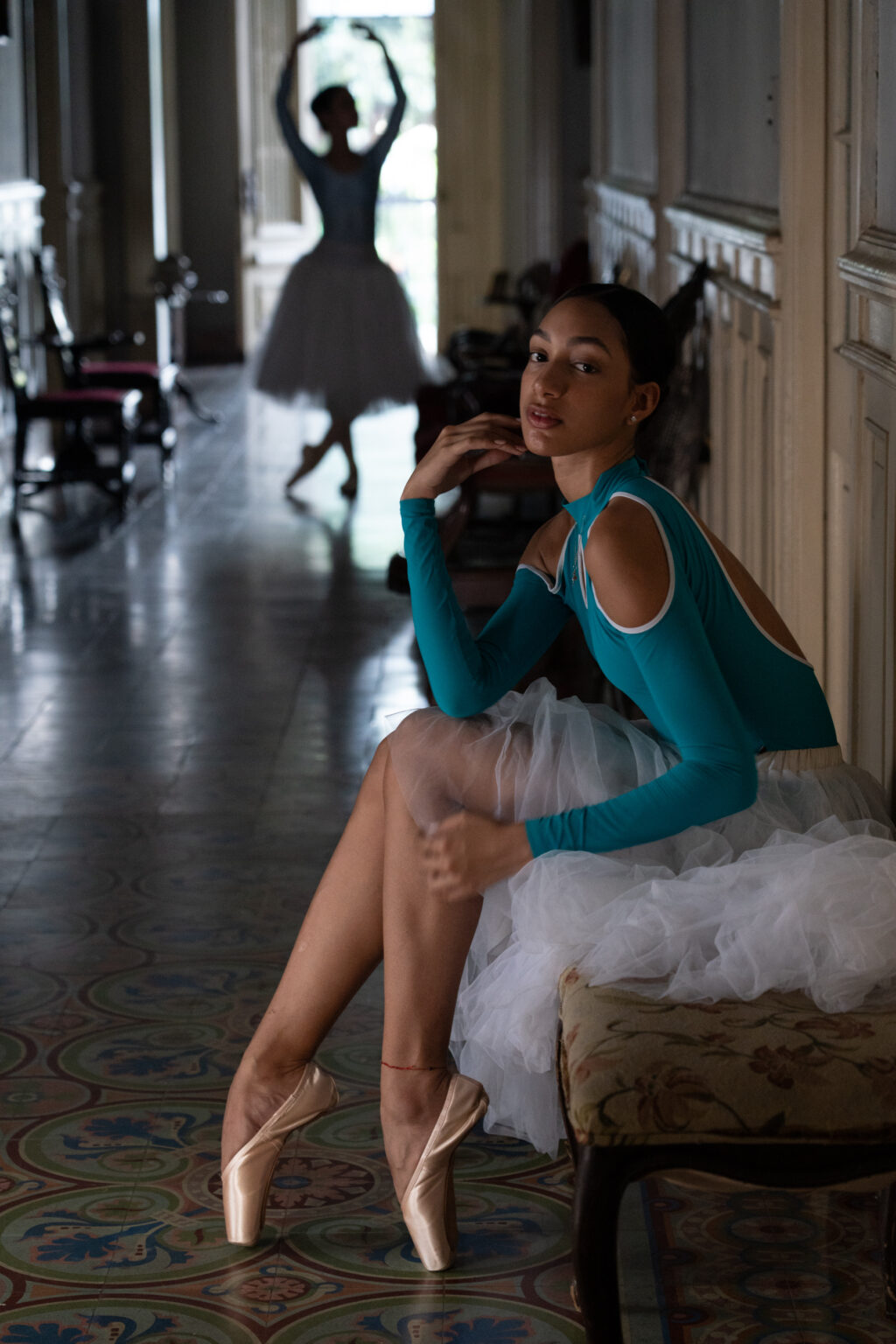
The corridor where one dancer rests on a worn upholstered bench in pointe shoes while another, blurred and silver in the doorway light at the end of the hall, stretches her arms into a perfect fifth position above her head, as if she had walked out of an older photograph into this one.
I made the last photograph at the end of the day, after the students had gone. I wanted it to be a portrait of someone who was not there.
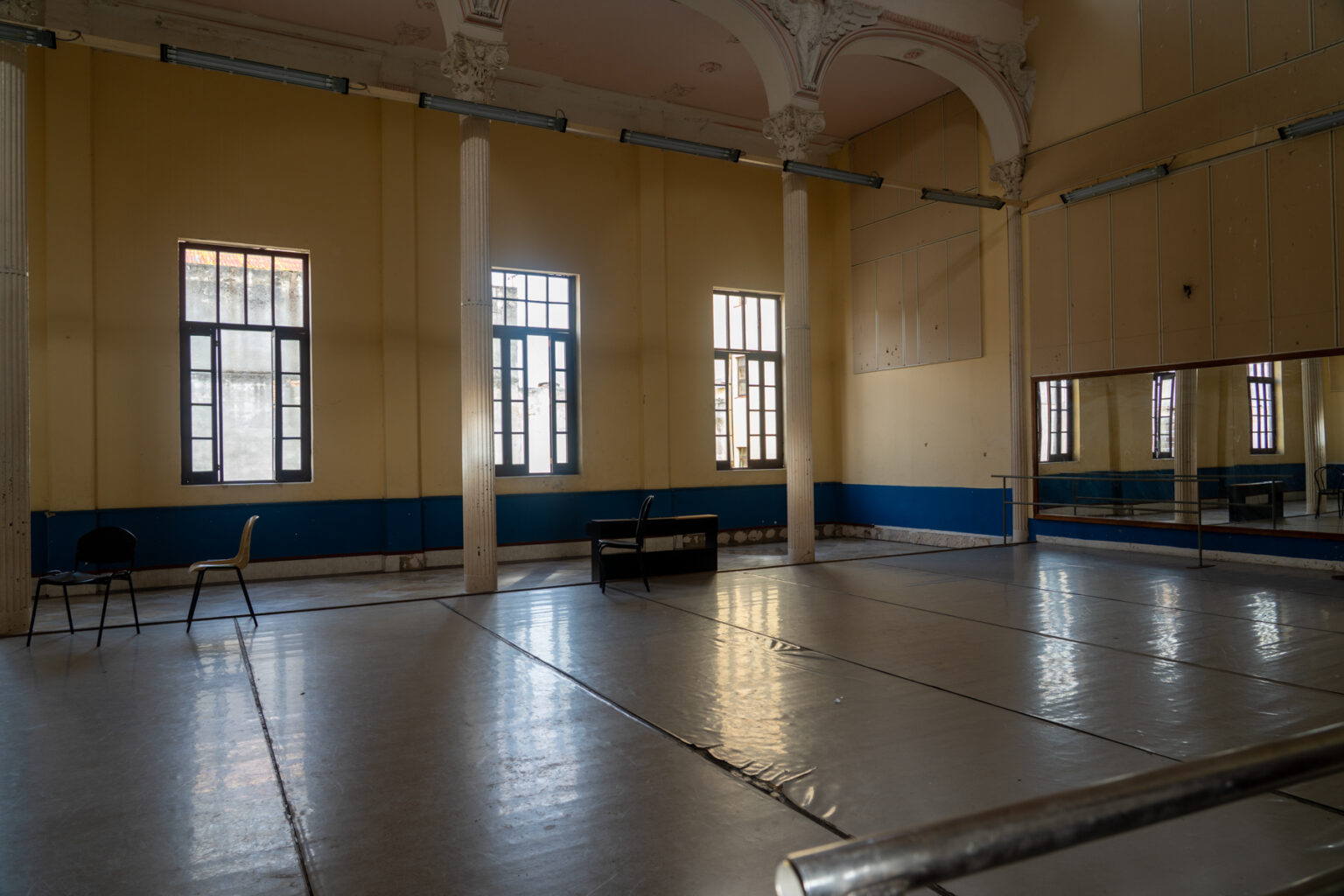
The studio is empty. Three tall windows let in the afternoon. A single chair sits against the wall and the barre catches the light along its length. There are no dancers. There is no teacher. There is the sprung floor and the mirror and the columns and the high ceiling with its fragment of plaster ornament, and the long pale rectangles of light moving across the floor toward the place where the first position would be.
Alicia Alonso died in Havana in October 2019, five months before the pandemic closed the building. The school I walked into in 2024 was the one she had spent her whole life dancing toward. The barre is hers. The mirrors are hers, even cracked. The children are hers. So is the absence in that last frame, the kind of absence a building keeps when the person who imagined it is no longer in the room.
She could barely see any of it.
She built it anyway.